MUNICIPAL PARKING NOW REQUIRES AN APP, AN ACCOUNT, AND A WORKING SIGNAL IN A CONCRETE BASEMENT
The coin slots were removed in March. The app requires registration, a verification email, and mobile data at a location engineered to exclude it.
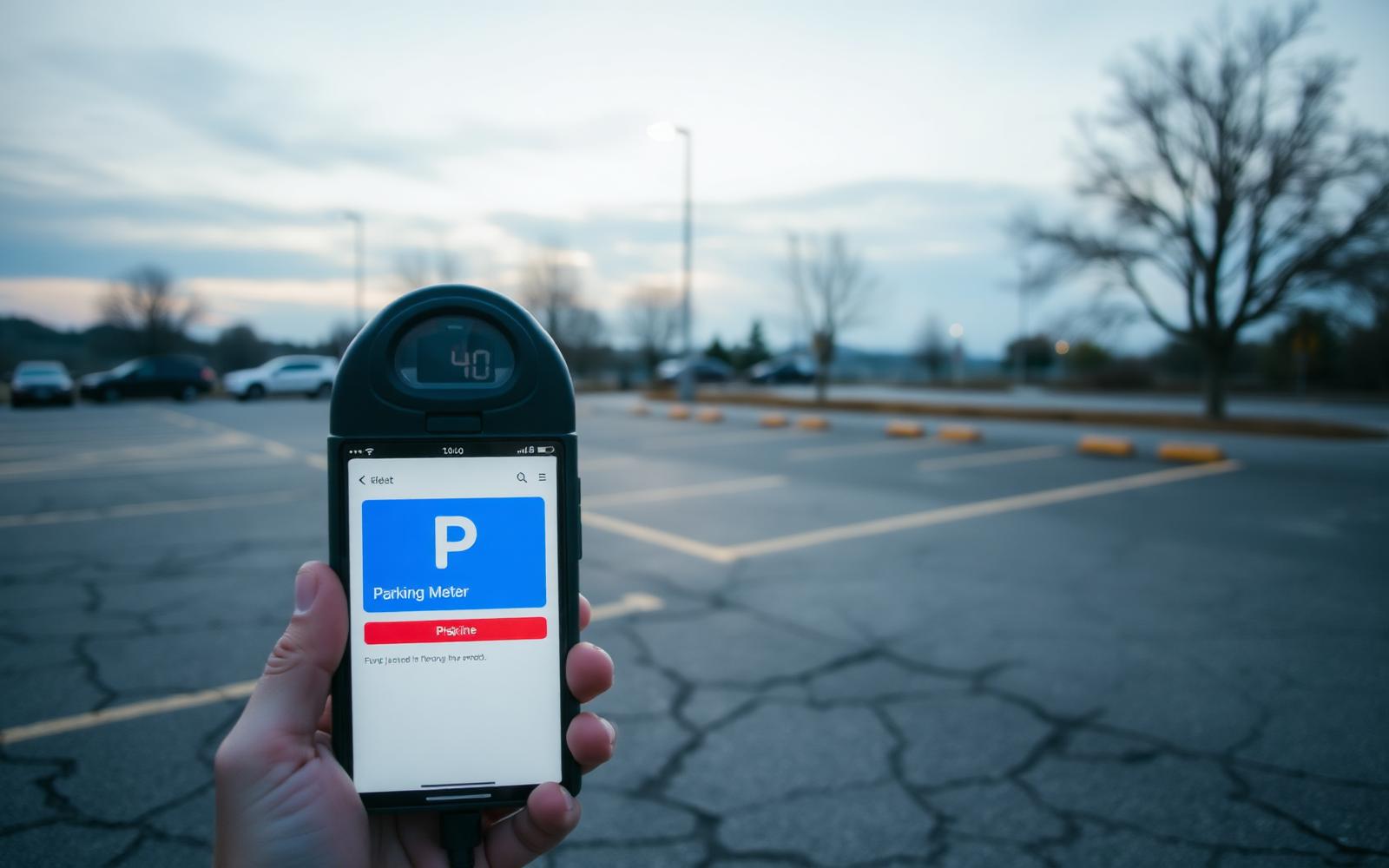
The authority's case for removing coin payment is decent: collection costs, vandalism, staff time. We accept all of it. Our objection is narrower and, we think, harder to argue with — the replacement has a single point of failure and it is located inside a building made of signal-absorbing material.
To pay, a driver must download an application, create an account, confirm an email, add a card, select a zone, and remain connected long enough to complete a transaction. Enforcement, meanwhile, requires no connection at all. It requires a camera and a licence plate.
The people most affected are the ones least represented in the procurement meeting: drivers without smartphones, drivers with prepaid data, visitors on roaming, and anyone parking in a basement. Enforcement notices were issued to all of them.
There has been movement, and we record it fairly: a pay-by-SMS fallback launched in July. It works. It is also undocumented on the signage, which is why this case is partially fixed rather than closed.
Evidence & source material
- PHOTOGRAPH
Signage listing app as sole payment method
Photographed after SMS fallback launched. Signage not updated.
- MEASUREMENT
Signal survey, level -2
No usable data connection on three carriers at nine of twelve bays.
- DOCUMENT
Enforcement notice issued during outage window
Notice timestamp falls inside a documented payment-platform outage.
Response from the responsible party
No response received. The right of reply remains open indefinitely and any statement will be published here in full, unedited.
Case updates
INQUIRY SENT
Asked when signage will mention the fallback. Awaiting answer.
PARTIALLY FIXED
Pay-by-SMS fallback launched. Score reduced to 8.3. Signage still lists app only.
CASE OPENED
Opened at AF 9.0 after coin payment removal.
Reader assessment
Tick everything that applies. Reader votes are advisory: they inform the frequency factor; they do not set the score.