PUBLIC BENCH FITTED WITH DIVIDERS PREVENTS LYING DOWN AND MOST SITTING
Armrests spaced every fifty centimeters stop anyone from sleeping. They also stop anyone with a suitcase, a child, or a stiff hip from using the bench as a bench.
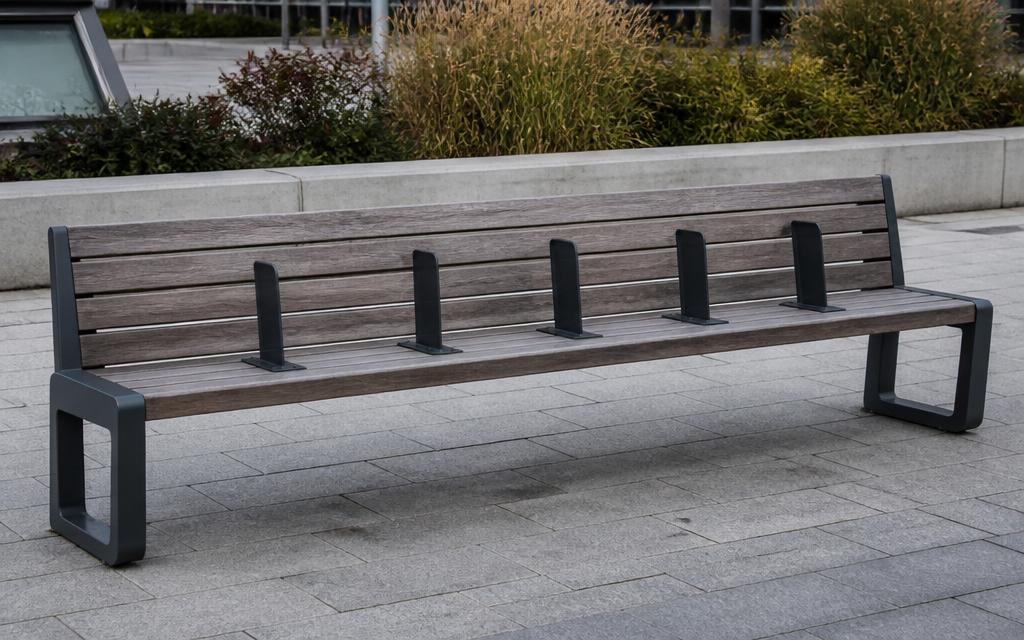
The bench is not broken. It is exactly as intended. The dividers are evenly spaced, properly welded, and painted the same colour as the rest of the street furniture. The only thing they prevent is rest.
Hostile architecture is the practice of solving a public nuisance by making the nuisance disappear rather than addressing it. A person without a bed is treated as a problem of sightlines. The bench is redesigned so that the person cannot lie on it, and therefore, in the logic of the specification, is no longer there.
The cost is borne by every other user. A parent with a toddler cannot sit sideways. A traveller with a suitcase cannot set it beside them. An older person who needs to lower themselves slowly finds the dividers in the way of their knees. The bench has become an advertisement for a city that prefers objects to people.
There are alternatives that do not cost more: benches of ordinary length without intermediate dividers, paired with services that actually reduce homelessness. The bench is not one of them. The bench is a policy made of metal.
Evidence & source material
- PHOTOGRAPH
Bench as installed, three locations
Same specification, same spacing, same manufacturer markings.
- DOCUMENT
Public tender: 'street furniture deterrent specification'
Requires dividers at intervals 'not to exceed 600mm'.
- MEASUREMENT
Usable sitting length vs. total length
Dividers reduce effective lying length by 100% and usable sitting length by 38%.
Response from the responsible party
No response received. The right of reply remains open indefinitely and any statement will be published here in full, unedited.
Case updates
SCORE REVISED 7.3 → 7.6
Population-affected factor raised after disability-access group added corroboration.
CASE OPENED
Opened at AF 7.3 following reader submissions from two council districts.
Reader assessment
Reader votes are advisory. They inform the frequency factor; they do not set the score.